

When social services reduce your care, refuse to assess your needs, or leave you without the support you rely on, the effect on daily life is immediate. Our community care solicitors help disabled people, older people, carers and families challenge decisions made by local authorities and government departments and, where support is urgently needed, we can act within hours.
We advise on care needs assessments, cuts to existing services, residential placements, adaptations at home, and support for disabled children and care leavers. Wherever possible we resolve matters without court proceedings. Where that is not possible, we are experienced in taking public bodies to court.
Brilliant team. Knowledgeable and strategic. Particularly good in cases involving mental incapacity.
– Legal 500 UK (2022)
Struggling to Get the Care You Need? Contact Us Today
Timing matters in community care cases. Court challenges must be brought promptly, and generally within three months of the decision, so delay can close off options. Just as importantly, while a dispute drags on, needs go unmet and a situation that was manageable in the spring can become a crisis by the summer.
Our community care solicitors can help you to:
- Understand quickly whether the authority’s decision is likely to be unlawful
- Identify which duty applies to your situation, and who is responsible for meeting it
- Obtain copies of assessments, care plans and internal records the authority holds
- Put your case to the local authority in writing, before positions harden
- Take urgent action, including out of hours, where support is needed immediately
Speak to our team today to discuss your circumstances.
What Is Community Care Law?
Community care law governs the support that local authorities and government departments must provide to people who need help with daily living. It covers adults with physical or mental health disabilities, older people, disabled children and their parents, young people leaving care, and unpaid carers.
Local authorities have legal duties under the Care Act 2014 and the Children Act 1989 to assess people’s needs and, where those needs meet the relevant threshold, to arrange support to meet them. These are duties, not discretionary choices. Budget pressure alone is not a lawful reason to refuse support that a person is entitled to.
Community care law is the mechanism for holding authorities to those duties when they get it wrong.
A note on terminology: people searching for “social services solicitors” are sometimes looking for help with child protection or care proceedings, where a local authority is involved with their family and there are concerns about a child’s welfare. That is a different area of law, and our child care proceedings solicitors can advise you on it.
When Should You Speak to a Community Care Solicitor?
You may benefit from speaking to a community care solicitor if:
- Social services have refused to carry out an assessment, or an assessment has been delayed for months
- Your care package has been cut or withdrawn without a proper explanation
- The support offered does not realistically meet your needs
- A care home or nursing home placement is being arranged against your wishes, or a placement is being ended
- You have been assessed but no care plan has been produced
- Adaptations you need at home have been refused or repeatedly postponed
- You are a carer whose own needs have never been assessed
- You have been left without accommodation or support and the situation is urgent
You do not need to have exhausted every complaint first. In urgent cases, early legal advice often produces a faster result than a complaints process.
Where the person concerned may not be able to make the decision themselves, questions of mental capacity and best interests can arise. Our Court of Protection solicitors work closely with the community care team on cases of this kind, so families are not passed between departments.
Adaptations and Support at Home
Many people can remain safely at home with the right adaptations and support. Where an authority refuses or delays adaptations, or fails to provide the level of home care that has been assessed as necessary, we can advise on challenging that decision.
Support for Disabled Children, Parents and Care Leavers
Local authorities have duties towards disabled children, children in need, and their families — including respite care and support that enables parents to continue caring. They also owe continuing duties to young people leaving care.
We act for parents of disabled children whose support has been refused or reduced, and for care leavers who are not receiving the accommodation, financial support or personal adviser that they are entitled to.
Support for Carers
Unpaid carers have their own right to an assessment of their needs, separate from the needs of the person they care for. This is one of the most frequently overlooked entitlements in social care. We advise carers who have never been assessed, or whose assessment has not resulted in any practical support.
Challenging a Social Services Decision
Deciding to challenge a public body can feel daunting, particularly when you rely on that body for ongoing support. In practice, most people are looking for one thing: the support they are entitled to, as quickly as possible. The route we recommend depends entirely on how urgent your situation is.
Complaints and Early Negotiation
Many disputes are resolved without court proceedings. A carefully argued letter setting out the authority’s legal duties and where it has fallen short can often prompt a reassessment or a revised offer, particularly where the authority recognises that its decision would be difficult to defend.
Local authorities operate a statutory complaints procedure, and unresolved complaints can be referred to the Local Government and Social Care Ombudsman. This route can be effective, but it is not fast, and it is rarely appropriate where someone’s immediate safety or accommodation is at stake.
Court Action and Urgent Applications
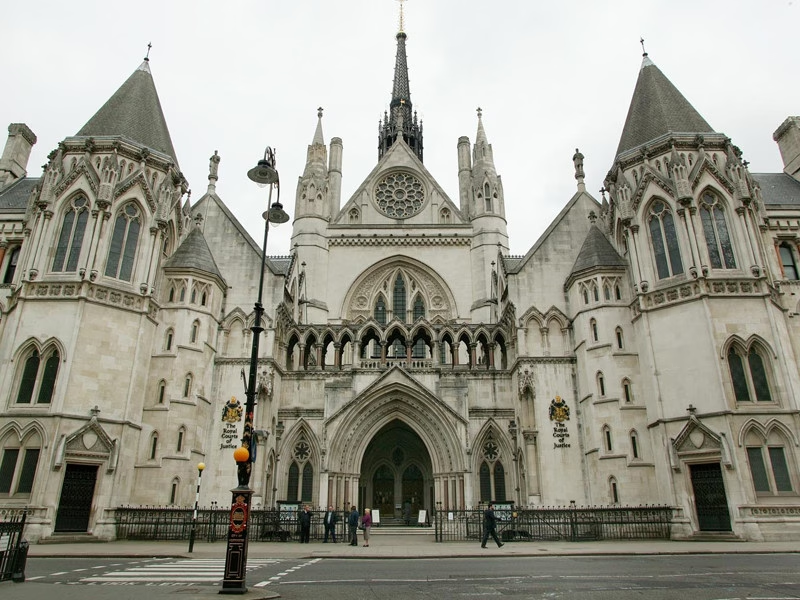
Where a local authority or government department has acted unlawfully, its decision can be challenged in the High Court. This process is known as judicial review, and it allows a judge to consider whether the body has acted lawfully, rationally and fairly. Strict time limits apply — a claim must be brought promptly, and generally within three months of the decision — so it is important to take advice early. You can read more about how the process works on our judicial review solicitors page.
Where the situation cannot wait, we make urgent applications for injunctions, including out of hours, requiring a local authority to take immediate action. This is one of the areas where early contact makes the greatest difference to the outcome.
How Our Community Care Solicitors Can Help
Our social care solicitors act for people at the point where the system has failed them. That often means moving quickly, and it always means being clear with you about what is realistically achievable.
We can:
- Challenge a refusal or delay in carrying out a needs assessment or carer’s assessment
- Dispute cuts, withdrawals and inadequate care and support plans
- Resolve disagreements about care home and nursing home placements
- Act for parents of disabled children and for young people leaving care
- Bring judicial review proceedings where a decision is unlawful
- Work alongside our housing and mental capacity teams where your situation crosses more than one area of law
Our clients frequently come to us in crisis — facing serious illness, homelessness or destitution. We have successfully compelled local authority social services departments to provide appropriate support, including emergency accommodation and care services, and have brought proceedings against the Home Office requiring suitable accommodation to be provided to vulnerable homeless families receiving hardship support.
Community care problems rarely arrive on their own. If your situation also involves your home, our social housing solicitors can advise, and we have dedicated pages covering legal help for homeless people and migrant support solicitors where support is restricted because of immigration status.
Why Choose TV Edwards?
- A recognised Social Welfare team. Our community care lawyers are part of an established Social Welfare department led by a Partner, and the team is consistently recognised by the Legal 500.
- Willingness to act, and act quickly. We regularly provide emergency assistance and make out-of-hours applications where a local authority needs to be compelled to act immediately.
- Joined-up advice. Community care problems frequently overlap with housing, welfare and mental capacity. Our solicitors are experts across community care, housing, and mental capacity law, so your case is dealt with as a whole rather than in pieces.
- Accessible support. We can arrange home visits and hospital visits where attending our offices is not possible, and can instruct independent interpreters across a wide range of languages.
- Clear communication. You will know who is dealing with your case, what is happening, and what comes next.
Client Testimonials
Contact Our Solicitors Today
Community Care FAQs
What does a community care solicitor do?
A community care solicitor advises people whose care and support is provided, arranged or refused by a local authority or government department. That includes challenging assessments and care plans, disputing cuts to existing services, resolving disagreements about care home placements, and taking legal action where an authority has acted unlawfully. The aim is always to secure the support the person is entitled to — through negotiation where possible, and through the courts where necessary.
an I challenge a decision made by social services?
Yes. Local authorities must follow the law when assessing needs and deciding what support to provide, and their decisions can be challenged if they have not. Common grounds include failing to carry out an assessment, reducing a care package without a proper reassessment, or producing a care plan that does not meet a person’s assessed needs. Challenges can be made through the authority’s complaints procedure, through the Local Government and Social Care Ombudsman, or through the High Court. Time limits for court action are short, so it is worth taking advice as early as you can.
How quickly can a community care solicitor act?
That depends on the situation, but in genuinely urgent cases we can act very quickly. Where someone has been left without accommodation or essential care, we can make urgent applications to the court — including out of hours — asking a judge to require the authority to act immediately. If your circumstances are urgent, tell us when you first make contact so your enquiry can be prioritised.
How much does it cost to instruct a community care solicitor?
Legal aid is available for much of the community care work that we do. Whether you can claim legal aid will depend on your financial circumstances. Where Legal Aid is not available, we can offer competitive hourly rates. We will explain the likely cost and the options open to you before you commit to anything.
Related Articles

These results highlight the firm’s continued commitment to providing trusted legal advice to individuals, families and businesses.

This decision is likely to have significant implications for local authorities, social workers, disabled people and their families.