
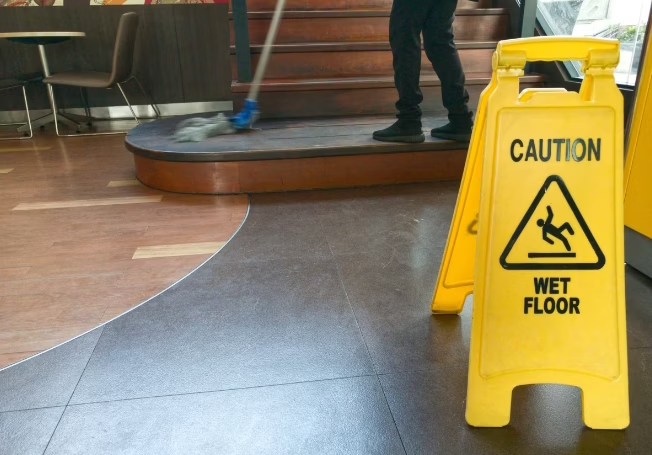
Falls are one of the most common causes of serious injury, and they are frequently dismissed as bad luck. Often they are not. Where a fall was caused by a hazard that someone else should have dealt with, you may be entitled to claim compensation.
We advise people who have been injured in slips, trips and falls, with particular experience in claims involving pavements, footpaths and other walkways maintained by councils and highway authorities.
Not every fall gives rise to a claim, and we will tell you honestly how we assess yours. We act for clients across London and the wider UK as part of our wider team of personal injury solicitors in London.
Injured in a Slip or Trip? Contact Us Today
Evidence matters enormously in these claims, and it disappears quickly. Pavement defects get repaired, spillages get cleaned up, and inspection records are only kept for a limited time. Early advice gives your claim the best chance.
Our slip and trip solicitors can help you to:
- Assess honestly whether you are likely to have a claim
- Establish who was responsible for the place where you fell
- Obtain inspection records, repair histories and previous complaints
- Secure photographs and measurements of the hazard before it is repaired
- Deal with the council or organisation and its insurers on your behalf
Speak to our team today to discuss your circumstances.
Can You Claim for a Slip or Trip?
A claim depends on showing that someone else was responsible for the hazard and failed to take reasonable care to deal with it.
That means two questions matter more than anything else: who was responsible for the place where you fell, and what should they reasonably have done about the hazard.
Who was responsible varies considerably. A council or highway authority is generally responsible for pavements and footpaths. A shop is responsible for its own floors. An employer is responsible for the workplace. The answer determines which legal duties apply, what evidence is needed and how the claim is run — which is why it is worth getting advice rather than assuming.
Being injured, on its own, is not enough. Nor is the fact that a hazard existed. The question is always whether the person responsible acted reasonably.
Falls on Pavements and Footpaths
Trips on raised paving slabs, potholes, sunken drain covers and broken kerbs cause a great many serious injuries every year, particularly to older people. Fractured wrists, hips and shoulders are common outcomes.
Who Is Responsible for the Pavement?
Most pavements, footpaths and roads are maintained by the local highway authority — usually the council. Some walkways that look public are not: paths through housing developments, shopping precincts, station approaches and estates are often maintained privately, and responsibility may sit with a landowner or management company instead.
Establishing this correctly at the outset is essential. Claims are regularly lost because they are pursued against the wrong organisation until it is too late to start again.
What Decides a Pavement Fall Claim
Highway authorities have a duty to maintain the highway. They are not liable simply because a defect existed — the question is whether they had a reasonable system of inspection and repair in place and whether it was being followed.
In practice, these claims usually turn on:
- The nature of the defect — its depth, height and how obvious it was
- How long it had been there before your fall
- The authority’s inspection records — how often the area was inspected, when it was last checked and what was noted
- Previous complaints about the same defect, from residents or anyone else
- Repair records, including whether the defect had been identified and left unrepaired
Much of this evidence is held by the authority itself. It can be requested, and we will do so for you.
Why Some Pavement Claims Do Not Succeed
It is worth being straightforward about this. Highway authorities have a defence available to them where they can show they took reasonable care in all the circumstances to keep the highway safe, and a properly documented inspection system will often satisfy it.
That does not mean these claims are not worth bringing. It means they are won on evidence rather than sympathy, and that photographs, measurements and prompt requests for records make a real difference. Where the records show a defect was reported and left, or that inspections were not carried out as they should have been, the position changes considerably.
What to Do After a Fall
If your fall happened recently, the following will help:
- Photograph the defect from several angles, before it is repaired
- Measure it if you can, placing a coin, ruler or shoe alongside for scale
- Note the exact location — the street name, nearest house number and which side of the road
- Report it to the council or the organisation responsible, and keep a copy of the report
- Take details of any witnesses, including anyone who helped you
- Seek medical attention, even if the injury seems minor at first
- Keep receipts for treatment, travel, equipment and any other expenses
Defects are often repaired within days of a fall being reported, so photographs taken at the time can be the single most valuable piece of evidence in the claim.
If you did not manage any of this, please still speak to us. Claims can still succeed, and we can request records that establish what the defect looked like and how long it had been there.
Slips and Trips at Work
If you tripped at work, your employer’s duties to provide a safe workplace are likely to be more relevant than the general principles set out above. Employers have specific obligations regarding floors, walkways, lighting, obstructions and housekeeping.
Claims of this kind are covered in detail on our page for accident at work claims, which explains how those claims work and what your employer is required to do.
Many people worry about the effect on their job. It is worth knowing that these claims are dealt with by an employer’s insurer rather than paid by the employer directly.
Slips and Trips in Shops and Public Places
Where you fell affects which rules apply and what evidence matters, so it is worth going to the right page.
If you slipped in a supermarket, shop or other business premises, see our page on occupiers liability claims, which covers spillages, wet floors and retailers’ cleaning and inspection systems.
If you fell in a park, leisure centre, car park or other public place, see our page on public liability claims.
If you are not sure which applies, contact us and we will point you in the right direction.
What Compensation Can Cover
Compensation covers the injury itself — the pain, suffering and loss of enjoyment of life it has caused, assessed with independent medical evidence — together with your financial losses.
Those losses may include:
- Loss of earnings, including future losses where you cannot return to the same work
- Medical treatment, physiotherapy and prescription costs
- Travel to appointments
- Care and assistance provided by family members
- Adaptations or equipment needed because of the injury
Falls affecting older people deserve particular attention. A fracture can result in a lasting loss of confidence, mobility and independence, and the need for care or adaptations at home. These consequences are frequently underestimated in early offers, and they should form part of the claim.
Related Personal Injury Services
How Our Slip and Trip Solicitors Can Help
We can:
- Assess your case honestly and tell you whether we think it is worth pursuing
- Identify the correct organisation responsible for the location
- Request inspection records, repair histories and previous complaints
- Arrange for the defect to be photographed and measured where it still exists
- Obtain independent medical evidence about your injury and recovery
- Calculate your losses in full, including care needs and future losses
- Negotiate with the authority or organisation’s insurers on your behalf
- Issue court proceedings where a fair settlement cannot be reached
- Keep you updated in plain English throughout
Where it is easier for you, we can meet at your home or in hospital, and we can arrange an independent interpreter if English is not your first language.
Why Choose TV Edwards?
- Experienced personal injury solicitors. Your claim is handled by a named solicitor, not passed between case handlers.
- Realistic advice about your prospects. Highway claims are defensible, and we will tell you plainly how we rate yours rather than encouraging a claim that is unlikely to succeed.
- Fast action on evidence. We know how quickly defects are repaired and records are destroyed, and we act promptly to secure what is needed.
- An established London firm. We have supported clients across London and the wider UK for many years.
- Clear communication. You will always know what stage your claim has reached and what happens next.
- Practical support. Home and hospital visits and independent interpreters are available where they would help.
Client Testimonials
Contact Our Solicitors Today
Slip and Trip Claim FAQs
Can I claim for falling on an uneven pavement?
Possibly. Councils and highway authorities have a duty to maintain pavements and footpaths, but they are not automatically responsible whenever someone falls. The question is whether the authority had a reasonable system of inspection and repair and whether it was followed. Inspection records, repair histories and any previous complaints about the same defect are usually what decide it. We can request these on your behalf.
How deep does a pavement defect need to be?
There is no fixed legal measurement, despite what is often assumed. Authorities generally work to their own intervention levels, which set out when a defect is considered serious enough to require repair, and those levels are relevant evidence. The question is ultimately whether the authority acted reasonably in the circumstances, taking account of the defect itself, its location and how much use the area gets. If you can photograph and measure the defect, please do, as it will help us advise you.
What if I did not report the fall at the time?
You can still claim. Many people are too shaken or in too much pain to report a fall, and there is no legal requirement to have done so. Other evidence can establish what happened, including medical records, photographs, witness accounts and the authority’s own inspection and repair records. Contact us as soon as you can so we can request them before they are destroyed.
How long do I have to make a claim?
In most cases, three years from the date of the fall. Different rules apply to children and to people who lack the mental capacity to bring a claim themselves. It is far better to seek advice early, because pavement defects are usually repaired soon after being reported and inspection records are not kept indefinitely.