

TV Edwards Solicitors has launched a Neurodiversity Aware Family Law service to support the growing number of neurodivergent individuals misunderstood by the family justice system, often leading to trauma, unfair parental blame and unmet needs.
The team is headed up by Partner and Head of Public Children, Alia Lewis, an award-winning child protection solicitor and parent of an autistic child with additional needs.
Alia, alongside other legal professionals, including colleagues, Sheena Vadher and Fauzia Mumani, is also a co-founder of FLANC (Family Law Advice for the Neurodivergent Community) – a non-profit initiative focused on improving access to justice and systemic reform for neurodivergent children and adults.
Despite at least one in five people in the UK being neurodivergent, many continue to be misunderstood within the family justice system. This can result in significant trauma, anxiety, frustration and, in some cases, unfair treatment and poor care planning, particularly in child protection and care proceedings.
Research shows that 63% of cases in England, Scotland and Wales where parents are accused of Fabricated or Induced Illness (FII), involve children described by their parents as autistic or having a non-visible impairment. A separate report by social care charity ADASS found autistic parents are three times more likely to face FII allegations than non-autistic parents, often due to a lack of understanding around neurodivergence.
The impact can be severe. Families report symptoms consistent with post-traumatic stress disorder, alongside deteriorating mental and physical health, financial hardship and, in some cases, suicidal thoughts.
TV Edwards’ new service will provide tailored, trauma-informed support for autistic, ADHD and neurodivergent clients, as well as parents and children with additional needs or disabilities. It will cover a range of cases, including child protection, care proceedings, contact disputes and matters involving FII or misunderstandings of neurodivergence in professional assessments.
The team will also support clients who identify with Rejection Sensitive Dysphoria (RSD) and Pathological Demand Avoidance (PDA).
“Research shows the devastating impact on families when neurodivergent profiles are misunderstood, the family justice system needs to adapt to meet the needs of all individuals so that it is truly neuro-inclusive,” said Alia.
“Family law proceedings can feel overwhelming, particularly where behaviour, communication differences or sensory needs are misunderstood by the legal system. Without the right knowledge, there is a real risk of mischaracterisation and false narratives forming about parents, and also a failure to meet the needs of children with complex profiles.
“Our approach is designed to reduce those barriers and build trust from the outset – from completing an ‘All about Me’ document to avoid repetition and reduce stress, to simplifying legal processes, and to identifying where neurodivergence is being missed or misunderstood. We make practical adjustments that help clients have confidence in the system and the decisions being made about them and/or their children.”
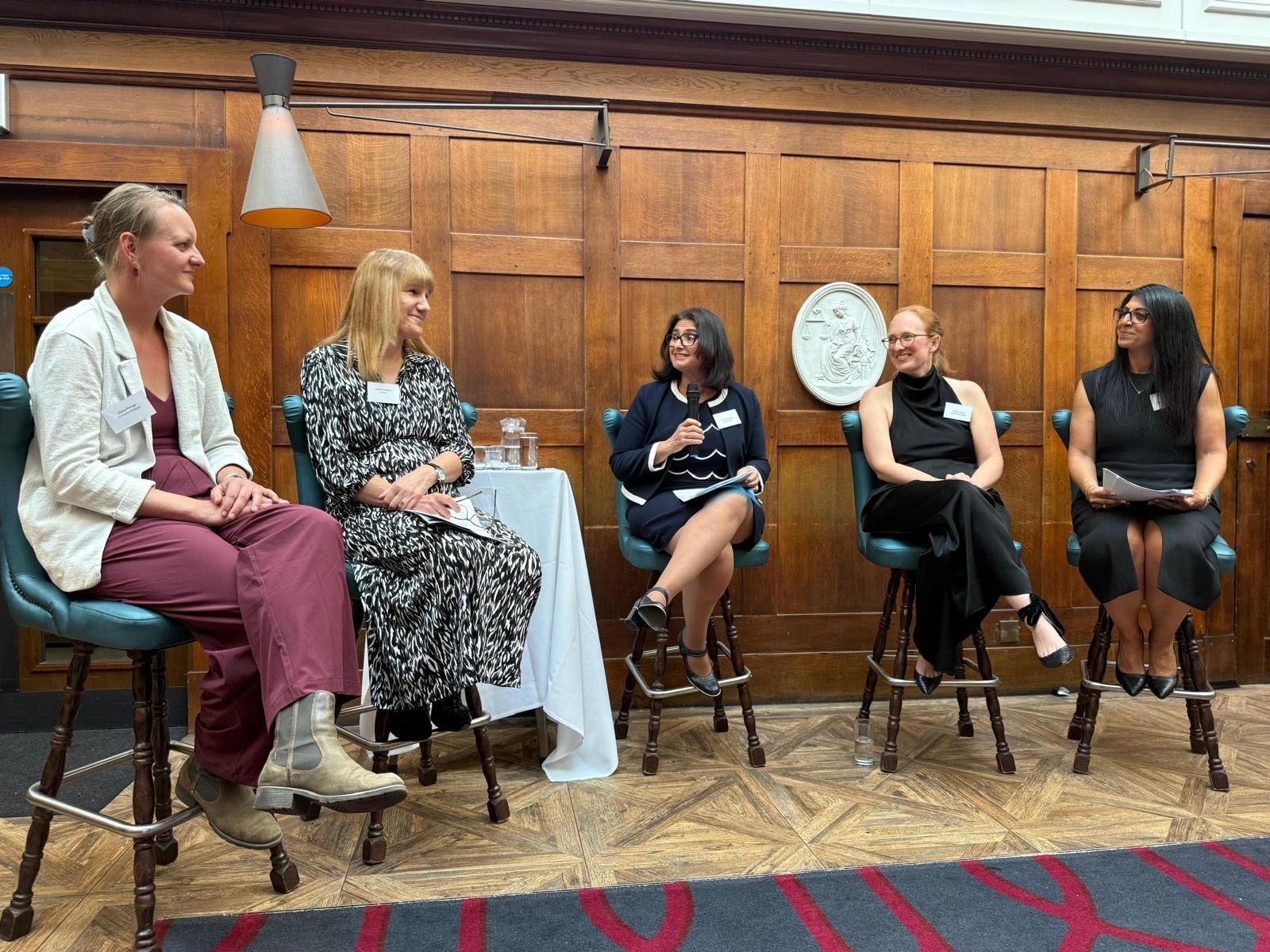
Neurodiversity Aware Launch Event
Last week, TV Edwards hosted an event bringing together public bodies and professionals from social work, charities, clinicians and education to discuss the urgent need for reform across a system that all too often continues to overlook and misunderstand neurodivergent needs. The evening featured a discussion panel that offered powerful professional and personal insights, leaving attendees with much to reflect on.
Panellists included Frances Harris, Counsel, Harcourt Chambers, who shared her experiences of false narratives about neurodivergent people in the legal system: “In the courtroom, you might have someone who needs to be fidgeting or can’t make eye contact, but all of the information is actually going in. My concern is that professionals might think they don’t care about what is going on or aren’t paying attention.
“This is why it’s so important to get the message out there about how neurodivergent behaviour can differ from neurotypical behaviour, so that we don’t make wrong assumptions based on neurotypical stereotypes. It’s just so important to keep reminding the court that there is an alternative prism through which to view this behaviour.”
Attendees also heard from Claire Lux, Specialist Consultant, advocate and former solicitor supporting neurodivergent families, who shared her personal and professional experience: “Instead of being recognised as a neurodivergent parent with neurodivergent children providing valuable insight into what was and was not working in the system, I found myself being viewed as the problem. Concerns were even being raised around neglect and FII.
“My experience taught me that understanding neurodivergent families is fundamental because, sometimes, the difference between support and harm can be nothing more than the lens through which the family is viewed.”
Alia added: “This isn’t a niche issue; it’s a systemic gap. As both a solicitor and the parent of an autistic child, I’ve seen first-hand how misunderstandings can negatively shape outcomes.
“Looking at a case through a neurodivergent lens can completely change its landscape and the trajectory for the family involved. That’s why I’m committed to improving family justice and child protection; to break down barriers for neurodivergent parties, to ensure we are achieving the best outcomes for the families we work with and to maximise opportunities for them to remain together, with the right support, where possible.”
For further information regarding the Neurodiversity Aware Family Law service click here